Thursday, 13 December 2012

Screenplay Research

  1.  “Responsive, proactive and an open door to writers, BBC writersoom is always looking at new ways to find and champion talent for all BBC platforms.” 
  2. “We believe in finding ways to inspire and inform you, to keep you across changes, giving you access to commissioners and production departments but most importantly to the skills and and experience of established writers.”
  3. Big Dramas tend to be on at 9pm and there is an obvious competition between ITV and BBC as they both have dramas on at the same time. Other dramas on before 9pm would be soaps for example, Eastenders and Coronation Street. 
  4. http://www.bbc.co.uk/programmes/b006m86d/features/script-peeks
  5. http://www.barb.co.uk/viewing/weekly-top-10? As you can see Dramas tend to dominate the viewing tables.
  6. Luther is about a crooked police officer who seems to find himself in a lot of bother with both the police he works for and the crooks he’s after because of his unorthodox methods. “John Luther is a Detective Chief Inspector working for the Serious Crime Unit in season one, and the new Serious and Serial Crime Unit in season two. A dedicated police officer, Luther is also a genius. He is obsessive, possessed, and sometimes dangerous in the violence of his fixations. But Luther has paid a heavy price for his dedication; he has never been able to prevent himself from being consumed by the darkness of the crimes with which he deals. For Luther, the job always comes first. His dedication is a curse and a blessing, both for him and those close to him.” – Wikipedia.
  7. The protagonist character in this is detective chief inspector Luther and an interesting point about him is that he’s black and in England you don’t tend to have black protagonist characters. 
  8. The main themes for Luther would be morals, ethics and corruption.


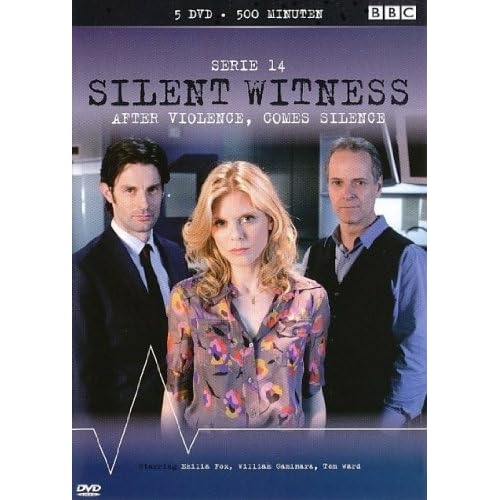
Silent Witness 
  1. The opening scene shows two young black lovers talking about taking the relationship to the next level which resulted in them getting engaged. After this the lady (Helen Roach) spotted her fiancee (Ainsley Modest) sister Simone Campbell. Whilst Helen and Simone are catching up a gang is shown in slow motion shooting out of the windows of a blacked out car towards the club. Innocent bystanders were then shown being shot up.
  2.  Ainsly Modest, Helen Roach, Simone Campbell and the two door men were the characters most concentrated on during the opening scene. 
  3. I believe that the primary audience for this type of drama would be middle aged (35-45) folk. This is because i think the values from this programme would be more relatable for them. Also the 9pm start time suits that age range more so than others. 
  4. The secondary audience would have to be 45 + as the age range and genre fit the stereotypical programme that you could imagine the 45 + age range watching. 
  5. One thing i could take from this episode would be the way they kept the audience guessing from the off until the end. I feel they done this successfully whilst also building tension up as the climax came closer. 
  6. There were many aspects of this programme i would keep away from whilst planning mine but the main one would be the way they had in my opinion too many different story lines going on at once so it became more and more confusing as it the episode developed more and more side stories.
Sherlock
'A scandal in Belgravia'
  1. The opening scene showed a chunk of the previous episode showing how Sherlock and Dr Watson got out of their previous debacle. After this the show then introduced the character Irene Adler in her place of work doing what she done best.
  2. Dr John Watson, Sherlock Holmes, Jim Moriaty and Irene Adler.
  3. The primary audience for Sherlock would be between the ages of 18-35.
  4. The secondary audience for Sherlock would be 35+ as i feel Sherlock does well in advertising to all ages.
  5. I liked the use of red herrings and also the dramatic twists kept the episode interesting.
  6. One criticism of Sherlock would be there is maybe too many twists which could leave some viewers confused and that might lose their interest.


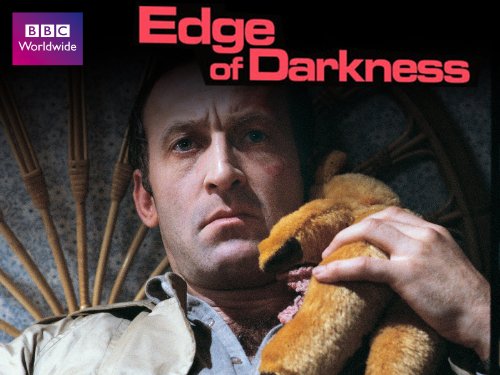
Edge of Darkness
'Compassionate Leave'

  1. The opening scene shows Godbolt and Craven speaking in a community centre type place about postponing Cravens detective enquiry.
  2. James Godbolt and Ronald Craven.
  3. The primary audience for this programme for me would be between 30-50 year olds
  4. The secondary audience for Edge of Darkness would be 50+ as i feel this appeals more to the older viewer.
  5. One thing I do find good about this episode of Edge of Darkness would be its portrayal of emotion and mental welfare after someone has lost a close member of their family.
  6. I didn't like how the creators of Edge of Darkness seemed to make the episodes more long winded than they need to be.

Eastenders

  1. The opening scene showed Alfie holding and talking to his son. In the upstairs section of the vic.
  2. Alfie Moon and his son.
  3. Eastenders primary audience would be between 35-60 in my opinion.
  4. The secondary audience would be between the ages of 18-35.
  5. I like the use of cliffhangers used in Eastenders as it keeps the viewer guessing on whats going to happen.
  6. I dislike the repetitive nature of Eastenders as it can become more and more tedious.


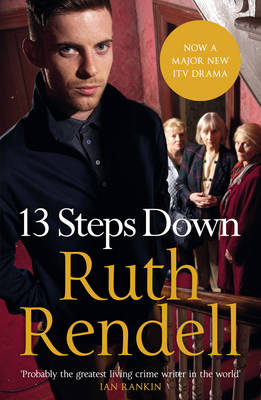
    13 Steps Down
     
     
  1. The opening scene shows Mix Cellini in his work uniform now arriving back home after seemingly just been at work. It also introduces his landlord, Gwendoline Chawcer as she speaks to him once he walks through the door.
  2. Mix Cellini and Gwendoline Chawcer.
  3. The primary audience for this programme would be around 25-60.
  4. The secondary audience would be 18-25 as i feel the programme could attract a broad audience.
  5. I really liked how the programme built up tension and suspense throughout. The acting was also really good.
  6. The only criticism i could think for this programme would be that the ending wasn't as great as it could've been.
  7.  

Monday, 3 December 2012

Understand the Requirements of Working to a Brief


There are various different situations in which you could be faced with a brief. Examples of a few a types of briefs would be contractual, negotiated, formal, informal, commission, tender, cooperative brief and competition. 

Contractual briefs come about when you go to a company with an idea and they like the idea however have some points that they believe would improve the programme so they put all them points in a contract and if you agree to the terms then you’ll sign the contract. An example of this would be Sherlock; the writers of the new Sherlock went to BBC with their idea and the BBC liked it however had some aspects they thought could be improved so they set up a compromise within the contract. 

Negotiated however is when the company and the potential employee work together in order to come up with an idea. When the two parties have come to an agreement they have to mutually sign a contract. 

Formal is when you meet the employer face to face and the employers set you objectives and targets they feel you should work towards. An example of this would be the Apprentice as Alan Sugar sets the contestant’s different targets and objectives each week in order to separate the weak from the chaff. Informal is the total opposite as the meeting could take place through emails or over the phone instead of a face to face meeting.

 A tender is when a company sends a post or email to several different participants with the chance for them to send their idea in and see how it stands against various other entries. The company would then pick the best quality entry which is also the most suitable for what they are looking for. An example of a competition of this sort would be when Paranormal Activity asked viewers to send in their best horror shot film and the reward was that the best few would be shown in the special features on the DVD. (PA Competition) A commission is when a media organisation reaches out to someone to create a piece of work for them. This would then be put down in to a contract.  
In the brief provided by E4 there were a few things which were required to ensure your video was suitable. The main requirements were, had to be submitted before the 9th November 2012, 10 second length, had to be E4 suitable. What I mean by E4 suitable is that it had to be clean and family friendly (no swearing or sexual content etc) in order for them to be able to show the esting throughout the day. Also it had to stick to the guidelines set by OFCOM and BCAP whilst also making sure they stick within Channel 4's remit. It was also aforementioned that you could have up to 3 entries however they’d prefer it if you submitted one high quality esting.


Throughout this project I have had good communication with my tutor which has meant that consultation has never been a problem. All the way through my tutor has been present to consult with me if I encountered any problems or setbacks. The E4 brief we were given was both vague and strict as the time limit and deadlines were very strict however they gave us plenty of time and plenty of room for creativity as all they wrote was make sure its suitable for the channel so within that is a lot of room for you to put your own spin on things. The main constraints we came across when producing the esting was the obvious ones, for example, we couldn't be racist nor could we show displays of graphic violence, drug taking or overly sexual content. If you was to do so and your esting was to be shown on TV then regulators such as, OFCOM would have a duty to take the esting off. So it's best to make sure E4 won't come across any problems with regulators because of your esting. 

After we had completed our project we then had to publish our finished estings on Facebook, Twitter, YouTube and also we sent emails with it attached. We then sent questionnaires to go alongside it so we could get honest feedback from all corners. Once we had received all of the feedback we then read through it all and focused on the problems which had propped up regularly on the feedback. From my feedback I found that people liked the ending so I decided to re shoot it whilst also prolonging it. 

During my esting project I didn't ever need to amend my budget or fees however in the real industry you may have to change the budget once you realise the full extent of the costs. Most of the time companies have a 10% buffer to help cover any costs not budgeted for or any extensions to deadlines. This is because when a project overruns it costs the production more money as you'll have to keep the sets up longer which will cost and also the cast and crew will need extra payment for working more than they first agreed in their contract. 

Changes to a project (that are suggested by the client) could result in contract changes or even new contracts. This could mean more money for the producer of the content. I did however have to amend my time at one point whilst editing as I had a computer failure so I had to start the editing all over again on a different PC which meant I had to overrun the deadline slightly. If I was in the industry and missed the deadline it would have consequences and my contractor could cut the pay I was expecting to receive because of it.


This project taught me a lot about my own animation skills, for example, I have found out that clay animation isn't really for me as I don't seem to have the patience or the skill with the clay which is required to be a successful clay animator like Nick Park. This has helped me realise that this is one media area that isn't for me and that'll be helpful in the long run when I am making my final decision on what I want to do in the media industry.

During this period I have learnt different animation skills which will help me in the long run because I will have this skill 'in my locker' if called upon. These skills include understanding frame rates, animating in pairs, building clay models, keeping the clay models warm and also improved my editing learning how to colour correct work successfully  I have had to multi skill whilst making my esting as I had to take pictures of my sting whilst also moving my background about a little bit to keep the video consistent and smooth. So I had one hand on the camera and the other switching different parts around. 

E4 gave us room for creativity and I used this by making mine individual by having a super hero type character in a funky 70s disco having a dance. My character also represented the black race with his brown complexion. To summarise, I feel I have completed all the important points in this project brief as I kept it 10 seconds whilst also making it very suitable for the channel. Although I had a few blips I feel that overall my esting was a success.  

Friday, 16 November 2012

Esting Evaluation

Finished E4 esting


My E4 esting was a short insight into the life of animated partier ‘Afroman’. It showed him dancing the night away in a colourful disco then ended with him magically pulling out a clay E4 logo out an holding it above his head. During this task enjoyed putting the set and character together. I also enjoyed coming up with a wacky fun idea which would fit the genre that E4 esting tend to be. Another aspect I enjoyed would be learning how to animate clay characters successfully. However I didn’t enjoy the frustrations of not being able to get your character exactly how you wanted him and also not being able to get your set to look just right like the picture you have in your head beforehand. One other aspect I really didn’t enjoy would be trying to get the character to move realistically without it either braking or continuously falling over. A couple of things I feel could really be improved upon would be the lighting consistency and also one other thing would be the smoothness of the camera movements. One thing I think was really good about my esting and I wouldn’t change would be the setting and character designs as I felt that they both worked really well. Feedback
To allow your friends and family to view your work you can enable them by sharing the video on twitter, YouTube and Facebook etc. I personally shared it on twitter and YouTube and this enabled a large amount of my friends and family to view the esting with ease. This also enables your friends and family to reply to your link with either compliments or criticism. On my YouTube comments I got a mixture of both but largely positive feedback however my twitter attempt failed as no one took the time out to review.


The criteria in which the group had to get our feedback on were genre, character, content, techniques, style, narrative, technical, aesthetic & creative quality. I collected my audience responses by using various different techniques for example, questionnaires, focus group, reviews, discussions and feedback from online exhibition. I could have done this a little better if I had exhibited it online a bit more for example I could have put it on Facebook and potentially got some more feedback from there however at the time I decided against it. 

This is some of the feedback I got according to the criteria: Genre: The overall answer I got from my questionnaires referring to what genre the esting was, “Comedy.” Character: “Like the character and the idea looks really good.” Was a bit of feedback I got from a comment left under my YouTube video. Content: In my video at the end my character pulls out an E4 logo to make the purpose of the video a little more obvious. It seems the people who have given me feedback picked up on this as they all resoundingly confirmed its suitability, “Definitely” was one of the many answers to question, ‘Do you think this is a suitable E4 esting?’

 Techniques: The technique I used was Claymation which is a form of stop motion animation. Although my skills were pretty limited though and that was sometimes evident in the video as at times it was a little jumpy and the lighting was a tad inconsistent at times. This may have been because I moved the character a bit too much between shots. A comment left on YouTube picks up on this problem, “Really good, the lighting was slightly off on some shots and the camera moved too much apart from that it was well done.” Style: The style of animation I went for was Claymation stop motion animation. During a discussion this comment came up when I asked about what they thought of the style of mine, “the concept of the video lends its self really well to Claymation and would have been attractive to younger audiences also.” 

Narrative: Although the video is only 10 seconds long it does have a very simplistic narrative following a young funky man showing of his groovy moves in a disco. In a discussion it was mentioned that “although your video is very short it does have a little narrative with a funky man in a disco.” 

Technical: In my video I tried to include a lot of different technically good camera angles and movement into my video and this seemed to pay off as one of the positives I got back from the focus group was, “Angles and movement are very complimentary.” 

Aesthetic: In my questionnaire I asked the question ‘Do you think this video is aesthetically pleasing?’ and all the answers on the questionnaires were positive an example of an answer would be, “Yes, the model and set are well made.” 

Creative quality: My creative quality did split the feedback as some people didn’t think ‘Afroman’ fit the disco setting however generally they thought it was overall a good fit, “Like the character and the idea looks really good” this was just one of many positive comments I got back about my overall idea for the esting. 

Once you have received all your feedback there are many ways of publishing the results for example, when I had received all of my feedback I wrote a written report about it on my blog. Another way to do it would be to do an oral presentation. Action plan and reviews are two other ways of evaluating feedback. These two would be the most helpful if you are going to do a second draft as they will highlight the strengths and weaknesses of your production. The action plan I did (focus group) was really helpful. Overall I believe my work was good and met all the recommended requirements set by both my tutor and the E4 website. 

Although the final piece could’ve been better in many ways, I do believe considering the budget and equipment I was provided with it turned out to be a fairly successful E4 esting.


Evaluation Part 2

The brief we were giving for this project was on the E4 website and it was advertised as a competition. The brief stated the few entry requirements we had, which were that we had a deadline, time frame and to make sure we maintained the E4 brand. Also the prize we would be working towards was our esting being on television and also a financial prize of £5000 if you are voted first prize and £500 if you come second.

In this blog post I will be evaluating how well I worked to the brief I was given. The brief I was following was from E4 as they let me know that the task was to create a 10 second esting which incorporated the E4 logo whilst also advertising the channel. Additionally from their brief I also used questionnaires in order to help me successfully complete this task.  This blog post is a written report on how I feel I met the requirements of the brief. 

During this project I like many others experienced a few constraints stopping me from doing certain things with my esting. First of all one constraint everyone encountered was the legal constraint which was to do with copyright. This constraint meant that we couldn't have whatever song we wanted in fact we had to choose from the tunes we were provided with from E4. 

Another constraint we encountered was regulatory, this meant we had to make sure our videos wouldn’t be flagged up by regulatory companies such as OFCOM and BBFC. This meant we had to make sure our estings didn’t contain any offensive material e.g. nudity or excessive violence. One constraint I had was that we were creating these models in the cold winter which meant we had to find ways of keeping the clay character warm otherwise it could break when moved. Another regulatory constraint was that we had a set deadline which meant we had a time limit on how long we could take to complete the project. The final constraint I struggled with would be the financial aspect. In this project I didn’t have a budget which led to limited equipment for the esting. For example, If I would have had a big boy budget I could’ve invested in a big scale set which would have made the video look a lot more realistic and overall professional however because I didn’t have this budget I ended up using an A4 box as a set which is a little less glamorous. In this project like all others we were set deadlines we had to meet which as always tests your time and work load skills. 

During this task I organised myself very well as I met the deadline however due to a technical fault in one of the macs I did have to rush at the end as I had to finish off the editing in a short amount of time. This was the only time during the project I overloaded myself with work but this wasn’t due to my incompetence instead the computer I was using. I felt also my communication with my tutor was spot on as it needed to be whilst I was in trouble with the computer and seeing as I turned out alright that must mean we communicated well.

I also came up with work which achieved the targets set to me by E4. The video also was of fairly good quality, receiving praise from my tutor. “Really liked the funky set design and like that fact it’s really suitable for the target audience.” Ellie Buchan (Tutor). The feedback I got from my questionnaires was mainly positive with a few bits of constructive criticism thrown in the mix. I got my feedback from a wide range of people, from a 41 year old housewife all the way down to a 9 year old school girl.

This particular project did help me in narrowing down what I want to do in my life career wise. This animation section has developed my media skills immensely giving me another skill in my locker if ever called upon. Although I do want to do want to one day go in to the media industry I don’t think animation is for me as the constant attention to detail type processes would drive me crazy. I believe animation is for patient creative people with a lot of passion for this certain area however this isn’t me at all.

Tuesday, 23 October 2012

Esting Justification

Previous E4 esting
I believe my esting idea suits E4 as the character is fun and comedic and would appeal to their 15-35 age range. Also from the research I’ve done of the previous E4 estings they're are all comedic and fun which seems to appeal to their audience. This seems to be the genre they prefer and also the genre they find success in. This is also links with the programmes they show as they seem to show a lot of comedy type programmes, for example, Shameless, The Inbetweeners, Big Bang Theory, Scrubs, Ugly Betty, How I Met Your Mother. This gives more of a reason to have a more comedic esting to fit the mood they aim to set. I believe my character is fun and if executed correctly could really work well for the E4 franchise.
My first E4 esting idea sketch

Monday, 22 October 2012

Report on E4

E4 (channel) logo.svg
E4 Logo
E4 first came about January 2001 as a pay-TV companion to channel 4. The E actually stands for entertainment. Their official target audience is 15-35 age group and they try and appeal to these by airing shows such as;
  • The Big Bang Theory
  • Misfits
  • Made in Chelsea
  • Ugky Betty
  • The Ricky Gervais Show
  • Scrubs
  • Skins
  • Hollyoaks
  • Shameless
  • The Inbetweeners
E4s most successful viewing figures to date (3.7 million) were from October 2010 which was an Inbetweeners episode. E4 are also well known for showing repeats of American sitcom Friends which was a big hit with the UK audience, however in 2011 Comedy Central bought the rights for Friends and E4 are no longer able to air it.

E4 Esting


My idea for an E4 Esting is... My Claymation character (Afroman) shows off his fun side by dancing like hip hop star in a night club whilst all the clay ladies fight for his attention. Whilst all this going on the villain (the E4 easting) swoops above the party as a King Kong type character and then after waiting for the perfect timing jumps like WWE wrestler and belly flops Afroman to the ground.

Friday, 19 October 2012

Set Design Idea

This is my idea for an E4 easting. My idea also includes my Claymation character Afroman. The reason i think my easting is suitable for E4 is because after doing some research i came to realise that the majority of easting’s broadcasted by E4 were light hearted and humorous and that's exactly how I’ve aimed to make mine.

Tuesday, 16 October 2012

 
Afroman
Age: 1,999
Profession: Full time superhero
he is as cool as cucumber
Walks around like a PIMP with his dimond walking stick
Nickname: Black Superman
 

Monday, 8 October 2012

The history of techniques and development of stop motion animation (P1, M1 & D1)

The human eye only retains images in 0.4 second that's how the thaumatrope works as the brain will just blend the images into one.This is known as persistance of vision. In 1912 however persistence of vision was debunked with no scientific evidence that it existed. Thaumatropes were the first of many optical toys and were populariesed by John Ayton Paris. The actual creation of the thaumatrope is most commonly credited to Sir John Herschal.

I drew an image on either side of this circular piece of paper and when I spun it quickly the brain starts connecting the two images.


Stop-frame animation Stop frame animation occurs when the process of taking of a photo then moving it then taking another photo is repeated and repeated in order to give it the illusion that the object it moving by itself. When this process is done with plasticine it is called clay-mation. Source
 

Frame rates The frame rate is the frequency an image is shown. Common frame rates are 24p, 25p, 30p. The faster the frame rate the smoother the image will appear. Source

Joseph Plateau 1801-1883 Joseph Plateau was a belgian physicist who in 1832 invented the phenakitoscope. A phenakitoscope is an animation device made out of paper which you spin rapidly to create a moving image. Source

William Horner 1786-1837 William Horner was a British mathematician who created the zoetrope in 1834. A zoetrope is a design which uses paper and a wooden base and when you spin it rapidly it creates the illusion of a smooth moving image when in reality it is a host of static pictures. Source

Emile Reynaud 1844-1918 Charles Reynaud was a French science teacher who was responsible for the praxinoscope(1877) which lead to first projected animated cartoon films. The device worked by using a strip of static pictures like the zoetrope and put on a spinning cylinder however in 1889 Reynaud improved this making it able to prject on to a screen. Source

Edward Muybridge 1830-1904 Edward Muybridge was a English photographer. He is famous for his work on photographic studies of motion and motion-picture. It is thought that if it wasn't for his work that motion pictures wouldn't be the same today. Source

Thomas Edison 1847-1931 Thomas Edison was an American inventor and businessman. He invented many important device whis shaped how life is today. One of his many inventions was the kinetoscope which he invented in 1888. The kinetoscope was a device which allowed viewers to watch movies individually through a peep hole at the top of the device. Although this wasn't a projector it introduced the basic approach we now assciotiate with cinematic projection. Source

Lumiere Brothers Louis 1864-1948 Auguste 1862-1954 The Lumiere brothers are filmakers from france. They are in fact the earliest filmmakers in histroy. They are famous for being huge influences on both animatiobn and early cinema. That made all this possible by inventing the cinematograph which was basically a camera and projector combined. Source

George Pal 1908-1980 George Pal was an Hungarian born American animator. He is famous for his short animations called pupetoons which he made in the 1940's. The pupetoons were small carved wooden puppets in which he would change the puppet in each frame. This process is called replacement animation. Source

Willis O'Brien 1886-1962 Willis O'brien was an Irish American motion picture special effects and stop-motion animation pioneer. Started out as a former newspaper cartoonist and sculptor. Willis is most remembered for his work on Lost world (1925), King Kong (1933) and Mighty Joe Young (1949)"was responsible for some of the best-known images in cinema history".Influenced the work of Ray Harryhausen after Ray first saw King Kong when he was 13. Source

Ray Harryhausen 1920- Ray Harryhausen is a American visual effects creator, writer and producer. He created his own brand of stop-motion model animation known as "Dynamation.". Worked on the animation for Mighty Joe Young with pioneer Willis O’Brien which later won an Academy Award. Source

Jan Svankmajer 1934- Jan Svankmajer is a Czech filmmaker known for his surreal animations. Self-labelled surrealist. Made films such as, Alcie and Lesson Faust.Studied at the institute of industrial arts in the 1950’s. Then started as a theatre director before making his film-making debut in 1964. Went on to make films for 20+ years after that. Source

The Brothers Quay 1947- The Quay brothers are American identical twins who are known for being influential stop-motion animators. They are also well known through their award for outstanding set design for their work the production The Chairs. Source

Tim Burton 1958- Tim Burton is an American film director, producer, writer and artist. He is well known for his work on such films as:
Beetlejuice
Edward Scissorhands
The Nightmare Before Christmas
Sweeney Todd
Sleepy Hollow
Aardman Animations Founded in 1972- was founded by Peter Lord and David Sproxton. They are renowned for their clay-mations and have created programmes which include, Wallace and Gromit and Creature Comforts. They also worked alongside DreamWorks to create their first computer animation film, Flushed Away. Source. The piece of work produced by Aardman animations i most enjoyed would have to be Chicken Run, Peter Lord, 2000.  

Cinema (animated films) Animation has been around since the early 19th century. One of the first loved characters was Gertie The Dinosaur. Animation developed from short films
to feature-length films. The first feature length animated film was Snow White and The Seven Dwarfs in 1937. My personal favourite animated movie is Toy Story 2,John Lassester,1999. 

TV animation As well as feature-length films animation has also appeared on TV throughout the years for example a classic is Looney Tunes and another well known animated TV show would be The Simpsons. The animated series i enjoy the most is Family Guy.

Channel Idents Channel idenst are little clips shown at the bookends of programmes which advertise that certain channel. Channels most renowned for this are E4 and Channel 4. The method of stop motion animation is used frequently in channel idents.
 
TV & cinema advertising In many adverts in this day and age the method of stop motion animation is used to make adverts more entertaining. An example of this is in the classic Zendium tooth paste advert. Cinemas also use this method before films. An example of a Stop motion advert shown at the cinema was the coke ad.

Coke Advert (Cinema)

Classic Zendium toothpaste advert

Animated Music Videos It has now become a method wihin music videos to us animation to make their video more fun and interesting to attract a wider audience to interact with the video. An example of an animated music video would be Gorillaz - Clint Eastwood.   


Gorillaz music video

SMA in computer games Stop motion animation is a method used in many medias including computer games. An example of this is ClayFigther for Super Nitendo.

ClayFighter
 
SMA for website use Stop motion animation is a method used in many medias including internet websites. An example of this would be the bbc iplayer as they show channel idents before programmes.

BBC Three Channel ident